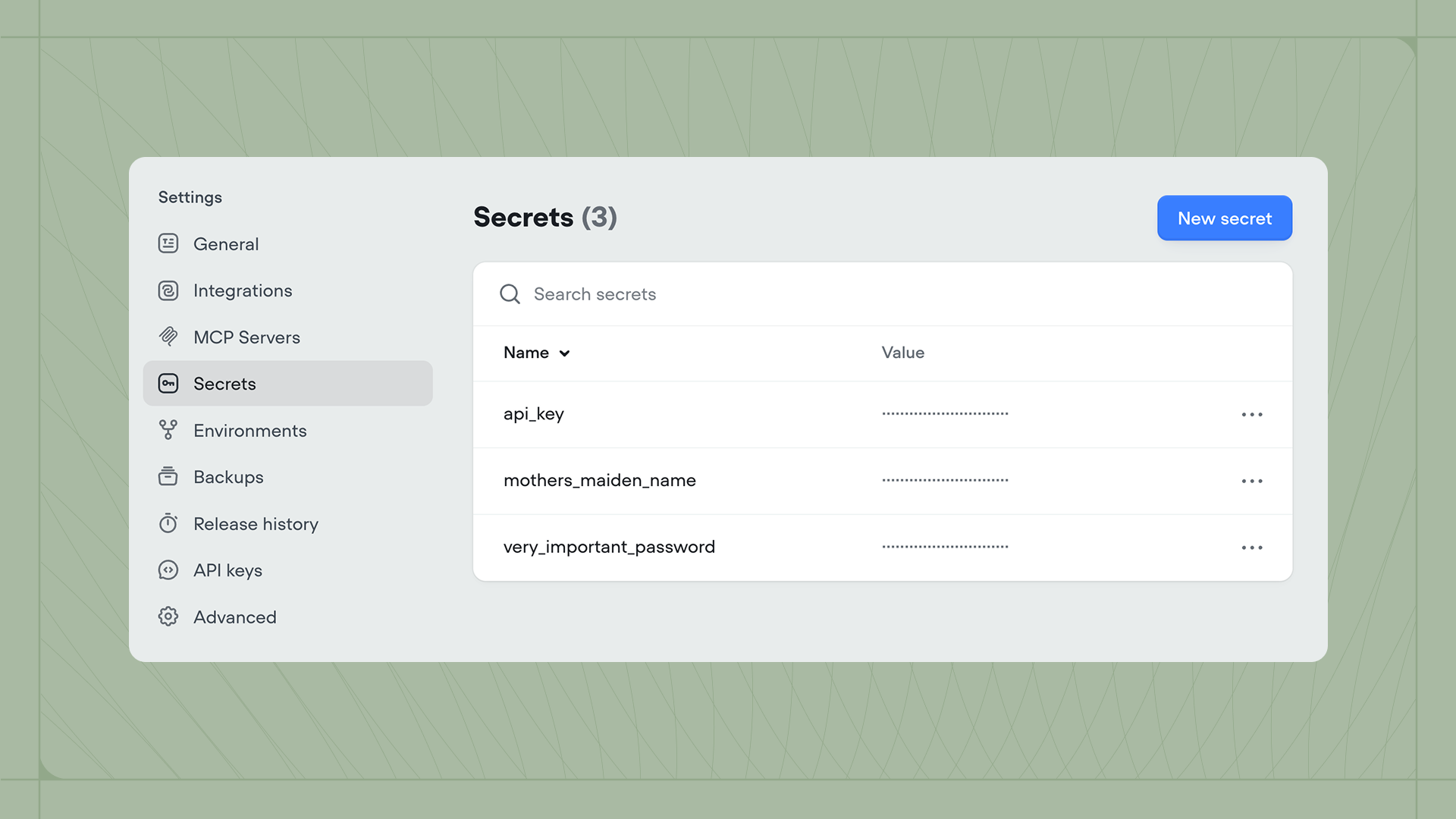
Cover Placeholder Secrets let you securely store sensitive information like API keys, database credentials, and encryption keys. Unlike variables, secret values are encrypted and hidden from view, keeping your credentials safe while still allowing your agent to use them.

Creating secrets

You can create and manage secrets in SettingsSecrets. Click New Secret in the top right to create one. When creating a secret, you’ll provide a name, value, and visibility setting:
  • Masked secrets are hidden by default but can be temporarily revealed by clicking on them.
  • Restricted secrets cannot be revealed after creation. Use this for highly sensitive credentials.
You can also create secrets inline while building. Type { in any input field, switch to the Secrets tab in the dropdown, then click Create Secret at the bottom.

Using secrets

Secrets work like variables but are accessed from a separate tab. In any input field within a tool, type { to open the dropdown, then switch to the Secrets tab and select the secret you need. (image)

Managing secrets

To edit or delete a secret, click the three dots menu next to it. For masked secrets, you can also copy the value to your clipboard. Restricted secrets cannot be copied or revealed.

Environment overrides

You can set different secret values for development and production environments. This lets you use test credentials while building and production credentials when your agent is live. To configure overrides, open SettingsEnvironments, then click Override Secrets next to the environment you want to configure. Enter the environment-specific values and save. Secrets without overrides use their default value. (image)

Duplicating and exporting projects

When you duplicate or export a project, only secret names are included. Secret values are never copied for security reasons. After importing a duplicated project, you’ll need to re-enter the secret values in SettingsSecrets.

Security

Secrets are encrypted using AES-256 GCM, which provides both confidentiality and integrity protection through a Message Authentication Code (MAC). Encryption keys are securely managed and secrets are stored and transmitted according to industry best practices.